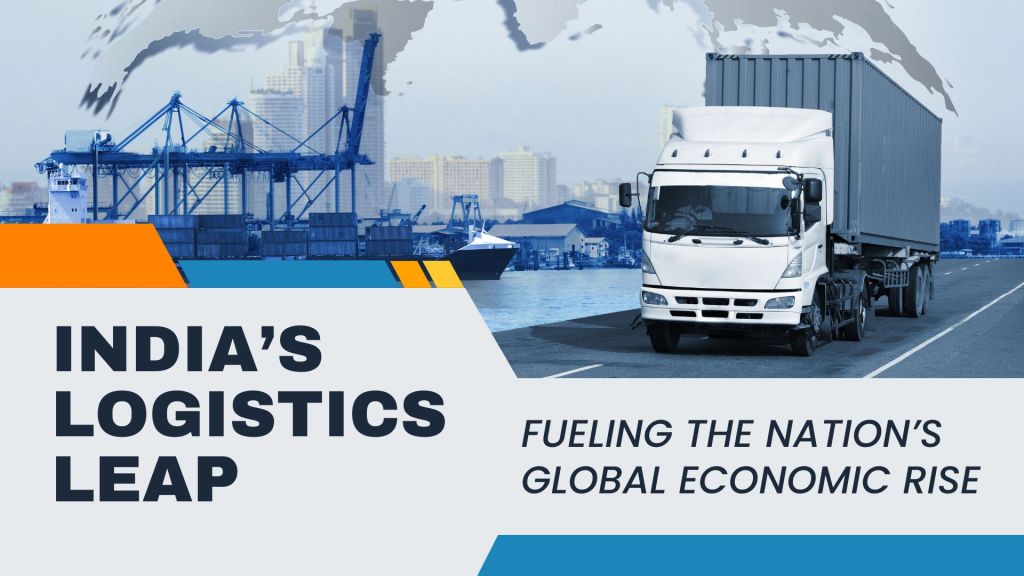
India is undergoing a landmark transformation in its infrastructure landscape, and nowhere is this more visible than in the logistics sector. With logistics costs dropping to 10% of GDP and an ambitious goal to bring them down to 9%, India is redefining how goods move across its borders. This shift reflects more than cost control it signals a maturing logistics ecosystem driven by multimodal connectivity, digital innovations, and eco-friendly transitions, all aimed at global competitiveness.
Unifying Transport Networks: The Rise of Multimodal Connectivity
India is creating a seamless logistics network by interlinking highways, ports, airports, inland waterways, and railway nodes into one synchronized system. This approach is transforming the traditional supply chain into a dynamic logistics web that minimizes delays and maximizes reach. Projects like PM Gati Shakti and the strategic rollout of Multi-Modal Logistics Parks (MMLPs) are opening up rural and remote areas to the mainstream economy. By bringing producers, farmers, and small enterprises closer to domestic and international markets, India is rewriting the rules of inclusive growth.
Smart Logistics: The Digital Backbone of Supply Chain Efficiency
Logistics modernization isn’t just about cement and steel, it’s equally about intelligence and speed. Initiatives like FASTag-enabled tolling, GPS tracking, and unified logistics interfaces are streamlining freight movement. This has reduced checkpost congestion, cut travel times, and improved fuel efficiency. These upgrades are crucial in today’s age of real-time delivery and just-in-time manufacturing. They’ve also elevated India’s image as a reliable export hub, aligning logistics with the demands of global e-commerce and precision-driven trade.
Financial Innovation: Funding Infrastructure Without Straining Resources
India’s infrastructure revolution has also been powered by innovative financing models. Under the guidance of Union Minister Nitin Gadkari, the government has adopted forward-thinking policies such as Hybrid Annuity Models (HAM), Toll-Operate-Transfer (TOT) schemes, and strategic asset monetization. These tools have successfully attracted private investment while maintaining fiscal prudence. Such models are becoming case studies for other developing countries looking to upgrade infrastructure without overburdening public finances.
Lower Logistics Costs, Higher Economic Gains
Reducing logistics costs has a multiplier effect on the entire economy. It enhances export margins, supports domestic manufacturing, and improves supply chain fluidity. But its influence extends even further enabling startup growth in tier-2 and tier-3 cities, attracting foreign investment, and generating employment across warehousing, transport, and digital logistics services. India’s ability to drive costs down is now directly contributing to a more competitive industrial and entrepreneurial ecosystem.
Greening the Logistics Chain: A Sustainable Shift in Motion
India’s logistics revamp is deeply aligned with its environmental commitments. From CNG and ethanol-based transportation to the adoption of EVs and hydrogen-powered trucks, the country is embedding sustainability into its infrastructure growth. Solar-powered logistics hubs, electric charging stations along highways, and dedicated green corridors are turning freight into a cleaner operation. These moves not only align with climate goals but also reinforce India’s leadership in sustainable innovation.
The Road Ahead: Building a Foundation for a Trillion-Dollar Future
As India gears up to become a $5 trillion economy, logistics will be one of the strongest pillars holding that growth. Advanced freight corridors, smart warehousing, and green transport initiatives are transforming logistics from a support function into a strategic enabler. Visionaries like Dr Niranjan Hiranandani, who have long emphasized the importance of integrated infrastructure in urban planning, echo the sentiment that efficient logistics are critical to national progress.
India’s logistics evolution isn’t just a chapter in its economic story, it’s the backbone of a broader, more ambitious transformation. With speed, sustainability, and smart technology leading the charge, the country is poised to become not just a regional leader, but a global logistics powerhouse.
 Prashant Vermaa Business Blog
Leave a comment