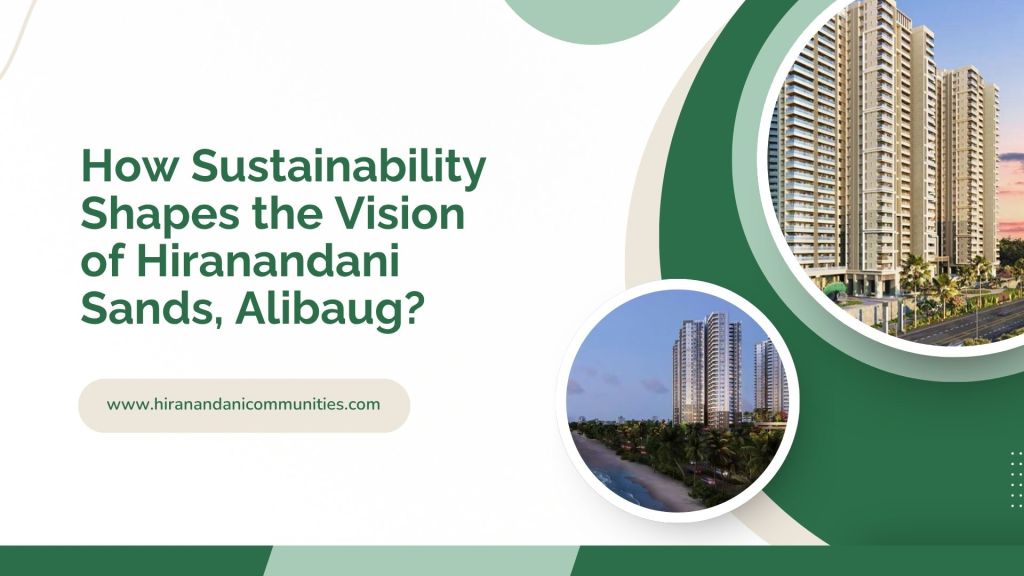
Along the pristine coastline of Alibaug, where turquoise waters meet lush greenery, sustainability is more than just an architectural concept; it’s a responsibility. The region’s delicate marine and forest ecosystems demand mindful development that respects both nature and the community it supports. Hiranandani Sands, located just a km away from the Blue Flag-certified Nagaon beach, is designed as an eco-friendly township in Alibaug that blends coastal beauty with responsible planning.
Rather than disrupting the environment, it embraces it, creating a space where green living in Alibaug thrives alongside modern comforts. Hiranandani Sands’ sustainability philosophy ensures that every structure, pathway, and amenity complements the rhythm of the sea and the serenity of the landscape.
Eco-Sensitive Master Planning for Coastal Harmony
The master plan of Hiranandani Sands Alibaug sustainable project celebrates harmony between built spaces and natural surroundings. Designed around protected wetlands, mangroves, and forest pockets, the township safeguards Alibaug’s fragile coastal ecology. Central to this plan is the adoption of a 25-acre forest area enriched with over 7,000 trees, envisioned as a permanent green lung for the region.
This isn’t just landscape design, it’s biodiversity preservation in action. The township is positioned as a global example of eco-sensitive coastal development, where the shoreline and greenery coexist seamlessly. By maintaining a respectful distance from the beachfront and adhering to environmental norms, the project preserves both the coastal charm and the ecological balance that make Alibaug unique.
Green Corridors and Open Community Spaces
Hiranandani Sands’ eco vision extends beyond architecture, it’s a lifestyle philosophy that connects people with nature. The township layout integrates tree-lined avenues, pedestrian trails, and landscaped green corridors that naturally filter air, regulate temperature, and enhance visual aesthetics. These open spaces double as community bonding areas, encouraging interaction while maintaining a low ecological footprint.
The result is a township where families enjoy shaded walks, seaside breezes, and a tangible connection to nature’s calm. In an era of rapid urbanization, Hiranandani Sands Alibaug redefines how modern communities can embrace green homes in Alibaug without sacrificing urban sophistication.
Smart Water Management Systems
Being located near a beachside environment makes water conservation vital. Hiranandani Sands’ sustainability measures include rainwater harvesting systems, water recycling plants, and stormwater drainage designed to protect the natural flow of coastal water bodies. Smart irrigation technologies minimize wastage and ensure landscape vitality even during dry seasons. These initiatives not only reduce water consumption but also prevent soil erosion and saline intrusion common to coastal developments. Every drop is accounted for, making this sustainable lifestyle township a benchmark for water efficiency in sustainable real estate projects in India.
Balancing Growth With Ecology
Building along Alibaug’s scenic shoreline demands responsibility and restraint. Hiranandani Alibaug project is developed with an ethos of balance, introducing apartments, serviced apartments, hotels, and convention centers that harmonize with the coastline rather than overpower it. The township design avoids over-commercialization and ensures that the Blue Flag-certified Nagaon beach remains untouched and accessible in its natural form.
Every construction decision is guided by respect for Alibaug’s identity as a tranquil coastal town. This is not just development, it’s an evolution that enhances the area’s allure while protecting its ecological soul.
Long-Term Vision: A Global Benchmark in Sustainable Living
The vision behind Hiranandani Sands’ eco vision goes beyond present-day luxury. It’s about creating a legacy, a township that future generations can inherit without ecological compromise. As climate concerns grow worldwide, this project demonstrates that sustainable development and economic growth can coexist beautifully.
With its balance of coastal charm, infrastructure, and environmental stewardship, Hiranandani Sands Alibaug positions itself as a case study for sustainable real estate projects in India. It stands as a symbol of progress rooted in preservation, a model that other coastal cities may aspire to follow.
Conclusion
Hiranandani Sands sustainability is not a marketing tagline, it’s the foundation of its philosophy. From conserving water and energy to protecting mangroves and beaches, the project embodies responsible coastal development in every detail. The township reimagines how modern living, nature, and community coexist, offering residents the rare opportunity to enjoy a beachfront lifestyle without ecological guilt.
As Alibaug evolves into a global coastal destination, Hiranandani Sands Alibaug stands as a beacon of balance where luxury meets environmental consciousness, and every sunrise reminds residents that harmony with nature is the truest form of modern living.
FAQs
1. What sustainable features make Hiranandani Sands unique in Alibaug?
It integrates rainwater harvesting, waste recycling, renewable energy use, and a 25-acre forest zone to promote green living in Alibaug.
2. How does Hiranandani Sands protect the natural coastal ecosystem?
Through eco-sensitive planning around wetlands, mangroves, and the Blue Flag-certified beach, ensuring minimal ecological disturbance.
3. What role do green corridors and forest adoption play in the project?
They act as natural air filters, carbon sinks, and community spaces that enhance environmental quality while fostering social connection.
4. How does Hiranandani Sands manage water and waste sustainably?
It uses smart water management systems, stormwater recycling, composting units, and energy-efficient lighting to minimize environmental stress.
5. Why is sustainability important for the future of Alibaug’s development?
Because eco-sensitive coastal development ensures Alibaug’s pristine beaches, forests, and biodiversity are preserved for generations while promoting responsible urban growth.
 Prashant Vermaa Business Blog
Leave a comment